

AI Risk Mitigation for Law Firms: The Sanctions Are Rising, and They All Say the Same Thing
October 7, 2026
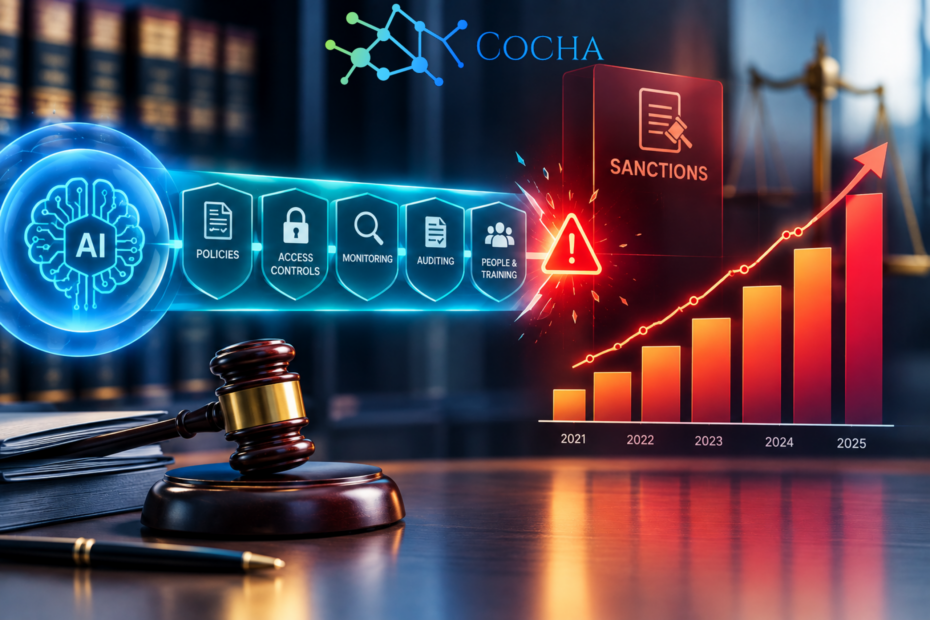
A federal court excluded an expert witness late last month. Not a first-year associate. Not a junior paralegal pulling cases at midnight before a filing deadline. An expert, whose entire value to the case rested on the credibility of their analysis, disqualified because that analysis leaned on AI hallucinated citations.
I think that case matters more than the dozens of associate level sanctions stories that came before it, and here is why. It proves the failure mode has moved past the easy narrative of an overworked junior lawyer cutting corners. It is now showing up in the highest stakes, highest scrutiny parts of litigation, among people who are supposed to know better and generally do.
What Every Sanctions Case In This Tracer Has In Common
Journal of Accountancy ran a piece in September calling it a recipe for sanctions, and that phrase stuck with me because it is exactly right. There is a recipe. It repeats. Someone uses a generative AI tool, the tool produces a citation or a quote that sounds plausible and reads clean, nobody checks it against the actual source before it goes in a filing, and a judge finds it later because judges, it turns out, still read the cases lawyers cite.
Norton Rose Fulbright’s 2026 litigation update tracks this pattern across a growing case count, and Damien Charlotin’s public database of AI hallucination cases has become something close to an industry reference at this point. Firms cite it in their own risk memos now. That alone tells you something about how normalized this problem has become.
Here is what strikes me every time I read another one of these cases. The AI tool involved almost never claims to be hallucination proof. Every major vendor in this space publishes some version of guardrails, grounding, citation checking, whatever term they are using this quarter. And courts keep sanctioning firms anyway.
Every vendor in this space claims some form of hallucination guardrail. The sanctions keep landing anyway.
Why Our AI Vendor Has Guardrails Is Not a "Defense"
I want to be direct about this because I see it in risk committee conversations more than I would like. Our AI vendor has guardrails is not a compliance position. It never was. It is a marketing claim being treated like a control, and those are not the same thing.
A guardrail built into a model is a probabilistic reduction in error rate. It is not a verification step. It cannot know what your specific matter requires, what your specific court’s citation standards are, or whether the specific case a system just generated exists in the form described. Only a human checking the source can know that, and the sanctions cases keep proving it.
What gets missed in a lot of these conversations is that this is not really a story about the AI model failing. Models do what models do. It is a story about a missing workflow step at the firm level, in exactly the place where a workflow step used to exist as a matter of professional habit before AI tools made it feel optional.
What A Real Verification Workflow Looks Like
This is where AI risk mitigation for law firms gets built, not in a vendor selection memo but in a workflow that assumes the tool will occasionally be wrong and plans for it anyway.
A workflow that holds up under scrutiny has a few non negotiable pieces. Every citation, quote, or factual claim generated with AI assistance gets checked against its actual source before it leaves the building, not spot checked, not sampled, all of it. The person doing the checking is not the same person who generated the draft, because self-review catches less than independent review does, every time, in every profession that has ever studied the question. There is a record that the check happened, dated and attributable, so that if a claim later gets challenged the firm can show its work rather than just asserting good faith.
None of this is complicated. It is closer to the citation checking discipline firms already expected from junior associates before AI tools existed. The gap is not knowledge. It is that AI generated drafts feel more finished than they are, which makes the checking step feel less necessary than it has ever been.
What This Costs Versus What a Sanction Costs
I get pushback on this sometimes, usually from a managing partner worried about adding friction to an already overloaded litigation team. Fair concern. Nobody wants to slow down a filing deadline for a process step that feels bureaucratic.
Here is how I would frame that tradeoff honestly, without inventing numbers to make the point sound bigger than it is. A documented verification step adds time to a drafting process. It is real, and it is not free. What it buys in return is a defensible record if a claim is ever challenged, and a meaningfully lower chance of the kind of finding that does not just cost the individual lawyer their credibility, it costs the firm its own, in front of the exact judges and opposing counsel who decide future matters.
A sanction is not just the immediate penalty either. It is a discoverable fact about the firm going forward. Opposing counsel will raise it. Clients doing diligence before a major engagement will find it. I have seen firms lose work over reputational exposure that started with a single filing nobody double checked. That is the actual cost comparison, and it is not close.
I am not suggesting every firm needs an elaborate new department to handle this. Most of what I am describing is a role assignment and a checklist, the kind of control a firm can stand up in a matter of weeks if someone owns getting it done.
Where To Start This Week
If your firm does not have a documented citation verification step specifically for AI assisted drafting, separate from your general editing process, that is the gap. Not a new vendor. Not a new tool. A workflow control, written down, assigned to a specific role, and audited the way any other risk control gets audited.
I have written before about the broader risk mitigation picture for law firms and about the trust gap that sits underneath most AI adoption decisions. Both are worth a read alongside this one, because the sanctions wave is really just the trust gap showing up in a courtroom instead of a client meeting.
For the full picture on where this case law is heading, Norton Rose Fulbright’s update is the most thorough tracking I have found: AI in litigation, update on Gen AI sanctions in 2026. The expert witness case I opened with is covered in detail here: Federal Court Excludes Expert for AI Hallucinated Citations.
If your firm wants an honest look at where this gap sits in your own workflow before it shows up in a filing, that is exactly what an AI Readiness Assessment is built to find.
Quick Answers
- Is AI risk mitigation for law firms mostly about picking a safer AI vendor?
- No. Vendor selection matters, but every major vendor in this space already publishes some form of hallucination guardrail, and courts keep sanctioning firms anyway. The missing piece is almost always a firm level verification workflow, not a better model.
- Who should check AI generated citations before filing?
- Someone other than the person who generated the draft. Self-review consistently catches less than independent review, which is exactly why the sanctions cases keep happening even at firms that believe they already double check their work.
- Does a documented verification step really reduce sanctions risk?
- It is the single most direct control available, because nearly every AI hallucination sanctions case on record traces back to a claim that was never checked against its actual source before it was filed.
Recent Posts
Have Any Question?
Call or email Cocha. We can help with your cybersecurity needs!
- (281) 607-0616
- info@cochatechnology.com
About the Author:

Steve Combs
Co-Founder & Managing Director, Cocha Technology
Steven is a fractional CIO/CISO with 30+ years of enterprise IT and security leadership. He has built AI governance frameworks for organizations with 1,700+ users, led enterprise Microsoft Copilot deployments, and conducted security assessments across law firms, energy companies, financial institutions, and PE-backed manufacturers.