
Microsoft 365 E3 vs E5 vs E7: Which License Does Your Firm Need for Copilot?
March 18, 2026
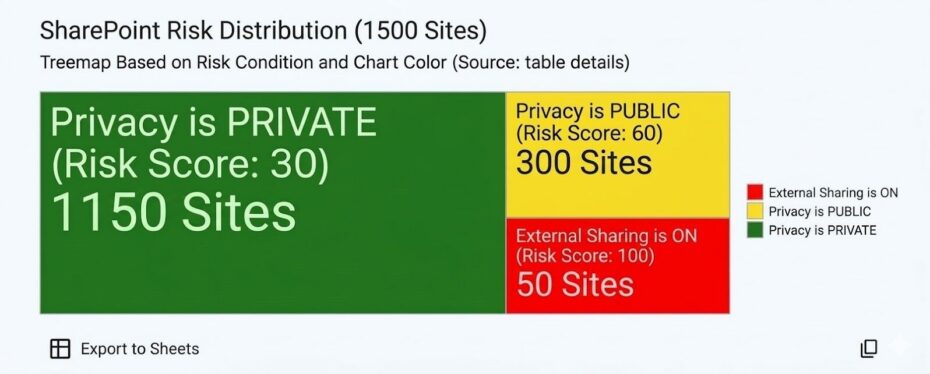
If you have spent any time managing IT in a high-pressure environment like a Houston law firm or an energy company, you know the drill. People move on, projects wrap up, and growth happens fast. What gets left behind in all that noise is what we call Ghost Data.
Ghost Data is the pile of old, unmanaged files with permissions that grew too broad over the years. These are the folders and paths that slowly ended up open to “Everyone” because it was easier at the moment. They sit outside your daily work and rarely set off any alarms. Your team cannot see them, but they are wide open to anyone on the network. In industries where keeping secrets is the entire job, Ghost Data risks are a massive gap in your defenses. Addressing this is a huge part of building a strong cybersecurity culture where every file has a clear owner.
This kind of oversharing does more than just leak data. It eats away at accountability. When everyone has access to a sensitive project folder, the idea of a data owner just vanishes. You are not just losing control of the files. You are not just losing data. You are losing the guardrails you need to grow the business safely.
The numbers are pretty striking. Around 73 percent of organizations have no real way to see their internal permission exposure in real time. Without that visibility, you have no audit trail and no warning before something goes wrong. Considering the cost of a data breach in the energy sector is some of the highest on record—averaging over $10.8 million per incident according to recent industry stats—waiting to see what happens is a risky move.
Most leaders we talk to are not shocked that they have exposure. They are shocked by how much of it is just sitting there in plain sight. We have run our Exposure Snapshot for more than ten firms lately, and it turns that uncomfortable suspicion into a clear plan. You do not need a three-month project to start fixing this. You just need an Information Security Audit that finds the biggest cracks in your foundation today.
In the Houston IT consulting landscape, we see a specific pattern. Legal firms handle sensitive M&A data, while Oil and Gas companies hold proprietary seismic data and land rights. These aren’t just files; they are the lifeblood of the organization.
When a “Ghost” file—perhaps an old Excel sheet containing bid numbers from 2022—is left in a folder marked “Public,” it becomes a ticking time bomb. If a disgruntled employee or a compromised account gains access, they don’t have to hack the system. They simply have to browse the “Everyone” folder. An Information Security Audit acts as the digital cleanup crew, identifying these vulnerabilities before they can be exploited.
At Cocha Technology, we believe that security is as much about people as it is about code. When we perform a Data Exposure Audit, we aren’t just looking for “bad” permissions; we are looking for “homeless” data.
Case in Point: We recently worked with a mid-sized legal firm in downtown Houston. During their 60-Minute Exposure Snapshot, we found a folder containing partner compensation records that had been inherited from a “Marketing” directory move three years prior. Because of that move, every intern in the firm had read-access. The IT team was mortified, but more importantly, they realized they lacked a “Culture of Ownership.”
By implementing a rigorous Information Security Audit, you empower your Department Heads to become “Data Stewards.” This shift trades technical liability for streamlined, accountable assets.
While our heart is in the Houston energy corridor, the risks of Ghost Data follow no geographic boundaries. Whether you are a firm in San Antonio managing healthcare records or a Global entity navigating complex international data privacy laws, the principle remains the same: If you haven’t audited it, you aren’t protecting it.
Our Zero Trust Security framework ensures that whether your data sits on a server in Kingwood or in a cloud instance in Europe, it is subject to the same “Verify Explicitly” standards.
Most firms view security as a “cost center.” We disagree. A thorough Information Security Audit actually improves operational efficiency. When you prune away the “Ghost Data” and lock down permissions, your systems run faster, your backups are smaller, and your team spends less time searching through digital clutter.
Key benefits of our audit process include:
Shadow AI Protection: Ensuring your AI tools don’t “hallucinate” sensitive leaked data into their summaries.
Copilot Readiness: Cleaning the “digital house” before inviting Microsoft’s AI in to index everything.
Compliance: Providing the documentation and rigor required for high-level government and corporate contracting.
Ghost Data is the silent liability that grows every day you ignore it. In the high-stakes world of business, you can’t afford to leave the lights off in your digital hallways.
Are you ready to turn those uncomfortable suspicions into a concrete defense strategy? Let’s start with an Information Security Audit that matters. At Cocha Technology, we engineer the resilient, self-healing systems that allow you to grow without fear.
Call or email Cocha. We can help with your cybersecurity needs!